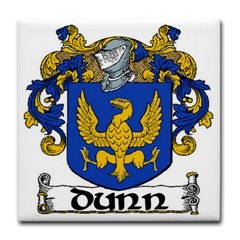
3/23/10

Origin and History of the Surname Cavanaugh/Kavanaugh

(Mary) Ellen Kavanaugh, aka Ellen Cavanaugh, was the wife of Edward Nolan, and each of them emigrated from Ireland to the United States in the mid-1850s. They were the maternal grandparents of WIlliam Edward (Bill) Dunn, and their stories are covered elsewhere in this blog. Following is a brief "snapshot" of the origin and history of her surname.

"This interesting surname is an Anglicized form of the Old Gaelic adjective 'Caomhanach' denoting association with St. Caomhan or St. Kevin. In this case, the first namebearer was Donal, son of Diarmuid Mac Murrough 12th Century King of Leinster, who was sent by his father to be educated at Kill Caomhan, i.e. St. Kevin's Church, County Wexford. Perhaps to distinguish him from others of the same name, the king's son was called "Caomhanach". Art Mac Murrough, 14th Century King of Leinster, was the first to use the agnomen Kavanagh, from the above "Caomhanach", meaning "handsome by birth", along with his surname.

Interestingly, Kavanagh is one of the very few ancient Gaelic Irish surnames having neither the prefix "Mac" or "O". The territory of the Kavanagh's lay in the adjoining Counties of Carlow and Wexford, and the name is still most widespread in that part of south East Leinster. Eileen, daughter of a 13th Century Kavanagh chief, is invoked in the well known song "Eileen Aroon", and one, Art Kavanagh was companion to Hugh O'Neill in his dramatic escape from Dublin Castle in 1590. Patrick Kavanagh, known as "the Wordsworth of County Monaghan", is one of the best known Irish poets of the 20th Century.

The first recorded spelling of the family name is shown to be that of Art Mac Murrough Kavanagh, King of Leinster, which was dated 1376 - 1417, in "Records of the Province of Leinster", during the reign of King Richard 11 of England, known as "Richard of Bordeaux", 1377 - 1399.
Last updated 3/23/2010
Source

3/13/10

Where our Nolan line came from in Ireland


Above is a map of Ireland showing where the counties discussed below are located and here's a link to the source of the map. [Click on the map above to enlarge it.]

As part of his long-running quest to learn more about our famly's history,
cousin Dan Nolan posted a request on a website called Find A Grave. Here’s the text of his submission [with my comments in brackets]:

Edward Nolan
Birth: May 29, 1832, Ireland
Death: Oct. 15, 1904 Joliet Will County Illinois, USA

Edward was the immigrant from Ireland who started this whole family. My family goes like this...

Edward (from Ireland, arrived ~1858)
- had Edward Francis
- had Joseph Harald [Hazel Nolan Dunn Youngs’ half-brother]
- had Joseph Edward [Bill Dunn’s cousin]
- had Daniel Nolan [2nd cousin to Bill Dunn’s offspring]

Burial:
Saint Patricks Cemetery Joliet Will County Illinois, USA
Created by:
Dan Nolan
Record added: Jul 22, 2009
Find A Grave Memorial# 39748549

♦♦♦

It took awhile, but on March 9th, 2010, a kind lady by the name of Sally had located the grave, taken photos, and posted them in response to Dan's request. Here they are. [Click to enlarge 'em.]


♦♦♦

1904 Prices
■ Bread: 4¢/loaf
■ Milk: 29¢/gallon
■ Car: $500
■ House: $4,000
■ Postage stamp: 2¢/each
■ Average income: $844/year
■ DOW Industrial Average: 70

♦♦♦

Here’s the descendancy from Edward to my generation’s father:

Edward and Mary Ellen Cavanaugh Nolan - Ireland to the U.S.

Francis Edward (aka Edward Francis) Nolan

Hazel Loretta Nolan Dunn Youngs

William Edward (Bill) Dunn

♦♦♦

So, now we know that the immigrant in our Nolan line came from
County Carlow in Ireland! Hip, hip hooray!

Edward married Mary Ellen Cavanaugh (also spelled Kavanaugh in some records) and they ultimately settled in Will County, Illinois. Her obituary tells us she had a brother, John Cavanaugh. An
1890 publication called “Biographical Album Of Will County, Illinois…” contains a biographical sketch about him. In part, it says, “In County Sligo, Ireland, about 1829, John Cavanaugh opened his eyes to the light, and in the Emerald Isle he remained until he was almost twenty years old…”

Clicking on the links above (the county names) will take you to sites where you can take a virtual tour of the respective counties.

Although we haven’t found any direct documentation of where she came from in Ireland, it seems reasonable to think that – as John's sibling – Ellen, as she was known, also came from County Sligo.

Those interested in learning more about the Nolan family name and ancient history will enjoy this blog, which has a huge amount of Nolan lore.

Last revised 3/15/2010

8/11/09

Photos: Edward Francis Nolan and family


▲ This photo of four generations is from August, 1941, and shows Edward Francis Nolan, aka Francis Edward Nolan, age 61, holding his great grandson, Patrick William Dunn, age 8 months. In the middle is Ed's daughter, Hazel Nolan Dunn, age 42, and on the left is her son and Pat's father, William Edward (Bill) Dunn, age 23.


▲ This picture is an expansion from the one above, and provides a portrait of what Ed Nolan looked like in 1941.


▲ This photo is Ed Nolan with his daughter, the nun Sister Jane Patricia Nolan. It's undated, but appears to be circa 1941, since his appearance is similar to the 1941 photo above.


▲ In this picture he appears to be somewhat younger than the ones above, and I suspect it's circa the 1930s
. It's not clear who the ladies in the background are, but they may also be family members.


▲ This photo of Ed Nolan and some of his children is circa 1908, and came from a video prepared by his granddaughter, Mary Jo Nolan Tongue. It was provided by his great grandson, Daniel Nolan and his wife, Jennifer, and it's the earliest known picture of Hazel Loretta Nolan.

From left to right in this picture are Agnes (who became the nun, Sister Jane Patricia), Bernard, Ed (at about age 28), Harold Joseph and Hazel Nolan (at about age 9), who was to become Hazel Nolan Dunn Youngs .

In identifying those in the picture, Jennifer Nolan said, "...
My theory is that since there is no wife included in the picture, [Johanna, the mother of Agnes, Bernard and Harold Joseph, died sometime after Harold Joseph's birth] I'm assuming this picture was taken after 11/29/07 (Harold Joseph's birth) and before he [Ed] married Margaret [O'Neil] on 10/19/1910. My guess is it was taken circa summer of 1908. I think the baby looks to be be about 8-9 months old."

Last updated 8/11/09

7/8/09

Nolan Family Obituaries

▲ This obituary is that of Edward Nolan, the Irish immigrant in our ancestral Nolan line, who is not to be confused with his son, Edward Francis Nolan, whose obituaries are shown below. Some odd things about this very sparse article:

■ It doesn't mention his occupation;

■ It names no survivors, not even his wife. I was hoping to learn about siblings and/or other relatives;

■ It fails to mention his being born in Ireland;

■ It says he left five daughters and four sons, but other records say he and his wife (Mary) Ellen had only eight kids. Her obituary (see it below) says eight, and so do both the 1880 and 1900 censuses;

■ It says he was 61 when he died. That would make his birth year 1843. His gravestone says 1832 and census records have it at about 1835, so that's confusing.

The obituary above was provided by a very kind lady by the name of Sally. She’s the same person who provided photos of Ed’s gravestone, which can be seen on another page of this blog.

▲The obituary above appeared in the Joliet Herald News (Illinois) on 22 May 1955, and refers to him being the husband of the former Margaret O'Neil (click on it to enlarge it).

▲This one also appeared in the Joliet Herald News on 22 May 1955, and also refers to Margaret O'Neil (click to enlarge).

▲The obituary above appeared in the Joliet Herald News, 14 Jan 1935, and is that of Margaret O'Neil Nolan, the third of his wives to predecease Edward Francis Nolan. It's interesting to note that neither her first name nor her maiden name were used in the article, only her identity as "Mrs. Edward Nolan" (click to enlarge).

The obituaries above were provided by Molly Kennedy, a genealogist whose help has been most valuable in documenting various elements of our Family History.

▲This obituary, undated and without a source noted, was provided by Mary Jo Nolan Tongue, granddaughter of Francis Edward Nolan, aka Edward Francis Nolan, with the able assistance of Daniel Nolan and his wife Jennifer. Dan is the great grandson of Ed, as he was was known while he was alive.

Note that this obituary refers to him being the husband of Johanna, his second wife - which was a source of confusion since he was last married to Margaret O'Neil Nolan. However, Molly, the genealogist, provided insight into the likelihood that the info for this one was provided by one of Johanna's children and published in a small local publication in Roseland, Illinois, where Johanna's name would be known.


▲This obituary, undated and without a reference to the source, is that of Ellen Kavanaugh Nolan (her brother's name being spelled Cavabaugh reflects the fact that her name was often recorded with an initial letter "K" as well as a "C") and she was Ed's mother. The article was provided by a friend named Kate to Dan and Jen Nolan, who made it available for inclusion in this blog.

I'm very thankful for the generous and valuable assistance of each of the people named above who provided these documents!


- PWD
Last updated 3/18/2010

6/1/09

Dunns in 1860 Madison County, Illinois, and Interesting Historical Background

Some Historical Background:
My research has shown that our Irish immigrant ancestors, Michael and Bridget Grace Dunn, first went from Ireland to England, then emigrated to the U.S. via New York in May, 1858. They made their way west and initally settled in the Alton area in Madison County, Illinois. This link shows where Madison County is in relationship to the rest of the state. Here's a map of the county, where you can see where they were.

In trying to imagine what their lives would have been like, I found it helpful to read historical stories about the area where they lived and the world in general. Following are some sources I found:
■ Here's a link with many Alton/Madison County stories;
■ Here's a site with photos of historical Alton;
■ Here's one with facts about Madison County;
■ This link has a chronology of world events in 1858.

James Buchanan was president of the United States when they arrived in New York. The tensions over slavery, which ultimately led to the Civil War, were escalating greatly. Here's a map showing how the states lined up on the issue in 1860.

We know they were in Alton in 1860 because the census tells us so, but we have no way of knowing how long it took them to get from new York to Illinois. However, on the 15th of October, 1858, a huge historical event occurred in Alton. That event was the Lincoln-Douglas debate, the last of seven they held in their campaign for the U. S. Senate. One author introduced his essay about the debate as follows:

“It was the 15th day of October, 1858. Crowds were pouring into Alton. For some days people had been arriving by the steam-packets from up and down the river, the up-boats from St. Louis, bringing visitors with long, black hair, goatees, and stolid, Indian­like faces, slave-owners and slave-dealers, from the human marts of Missouri and Kentucky; the northern visitors arriving by boat or rail, Abolitionists and [anti-slavery] Republicans, with a cast of features distinctly different from the types coming from the south.

They came from villages, townships, the prairies, from all the adjoining counties, from across the Mississippi, from far-away cities, from representative societies north and south, from congressional committees in the east, from leading journals of all political parties, and from every religious denomination within hundreds of miles, filling the broad space in front of the Town Hall, eager to see and hear the now famous debaters--the popular Stephen A. Douglas, United States Senator, nicknamed the 'Little Giant' and plain Abraham Lincoln, nicknamed the 'Rail-Splitter.'

The great debate had begun on the 21st of August at another town, and to-day the long-discussed subject would be brought to a close. Douglas stood for the doctrine that slavery was nationalised by the Consti­tution, that Congress had no authority to prevent its introduction in the new Territories like Kansas and Nebraska, and that the people of each state should alone decide whether they should be slave States or free. Lincoln opposed the introduction of slavery into the new Territories…”


Later in the essay he said, "Alton had seen nothing so exciting since the assassination of Lovejoy, the fearless Abolotionist, many years before."

Of course, after reading that I had to know more about the Lovejoy assassination. Speaking about that event is a site that says, "It has been said that, '...the first armed skirmish of the Civil War..' occurred in Alton, Illinois." The site also describes how a once-closed prison in Alton was reopened to house Confederate prisoners during that war, so Alton played a significant role in U.S. history during the time when Michael and Bridget were getting settled in their adopted country.

Trivia: Douglas won the senatorial election, but it cost him the presidential nomination. In answer to Lincoln, he was forced to expound on his views that the territories need not have slavery despite the Dred Scott decision. This was an 1857 decision by the U.S. Supreme Court, which ruled that people of African descent imported into the United States and held as slaves, or their descendants - whether or not they were slaves - were not protected by the Constitution and could never be citizens of the United States. (This decision was overruled by the adoption of the 14th amendment to the Constitution in 1868.)

The result was that the extreme pro-slavery faction of the Democrat party labeled Douglas indifferent to slavery rather than an advocate of it and split the party in 1860. Lincoln, on the other hand, only gained from the debates. Before 1858, he was scarcely known outside Illinois. After 1858, he was asked to speak in several other states and in 1860 received the Republican nomination and was elected president.

Although railroads and steamships were then being used for long-distance travel, the primary mode of local transportation at the time was horses and buggies. In view of that fact, the gathering of more than 6,000 people to hear the debate must have been an amazing scene. Here's a link to the full essay about the debate, which I find fascinating because it provides a glimpse into the historical circumstances our ancestral family became a part of after they arrived here. I'd love to know if Michael and/or Bridget were present for the debate, and if so, how they felt about what they heard.

♦♦♦

Michael Dunns from Illinois in the Civil War:

I found myself wondering whether our Michael might have been a soldier in the Civil War and learned that many immigrants, including the Irish, enlisted in the Union army. In fact, there's been a book written about an Irish regiment that was formed in Chicago. I found a site where I could do a lookup for his name and found four Michael Dunns who were from Illinois. The information is listed in the following order:
Soldier's name
Side
Function
Regiment Name

Dunn, Michael
Union
Infantry
89th Regiment, Illinois Infantry
Organized at Chicago, Ill., and mustered in August 27, 1862.

Dunn, Michael
Union
Cavalry
8th Regiment, Illinois Cavalry

Organized at St. Charles, Ills. (sic), and mustered in September 18, 1861.

Dunn, Michael
Union
Infantry
59th Regiment, Illinois Infantry

Organized at St. Louis, Mo., as 9th Missouri Infantry, September 18, 1861.

Dunn, Michael
Union
Infantry
20th Regiment, Illinois Infantry

Organized at Joliet, Ill., and mustered in June 13, 1861.

There's insufficient information on that site to further identify our Michael, and I've not seen any information anywhere else to link him to military service. Therefore I don't know if we'll ever learn whether one of those listed above is him.

♦♦♦

4605
Dunns served In the Civil War:
1627 were Confederate soldiers.
2978 were Union soldiers.


Source: Compiled by Ancestry.com from the Civil War Service Records

♦♦♦

Dunns in 1860 Madison County
Immigrants tended to cluster in groups of fellow countrymen, usually in areas where friends and other family members had settled. My research has shown that not only Irish families, but sometimes whole parishes and even villages were transplanted and reunited in their adopted country by utilizing a practice dubbed "chain migration". The significance of that is that the people listed below may very well have been part of this phenomenon.

"Chain migration can be defined as a “movement in which prospective migrants learn of opportunities, are provided with transportation, and have initial accommodation and employment arranged by means of primary social relationships with previous migrants.” (Source)


"Henry Mayhew explained how chain migration worked: 'As soon as the first settler is thriving in his newly chosen country, a certain portion of his or her earnings are carefully hoarded up, until they are sufficient to pay for the removal of another member of the family...; then one of the friends left "at home" is sent for; and thus by degrees the entire family is got over, and once more united'." (Source)

♦♦♦

Below is a list of the Dunns recorded in the 1860 census in Madison County, the first census after Michael and Bridget arrived here. I've put the known members of our ancestral family in red to make it easier to identify those we are sure are related to us.

In the census, but not showing on this page, are three males by the last name of Furlong, ages 15, 18 and 21, who are also members of Michael and Bridget's household. Their connection to Michael and Bridget is unclear, but they are recorded as being born in Illinois, so they apparently weren't relatives or friends from Ireland. They may have been boarders or hired hands.

It's interesting to see how many Dunns on the list were Irish immigrants, for, knowing about chain migration, it suggests that they and their families might be related to Michael and Bridget - and therefore to those of us in our Dunn line. It would be interesting to know is that's the case.

It's also interesting to note that occupations of adult males is recorded in the census, but not that of women. Apparently women were assumed not to be employed outside the home, so no occupational listing was required for them in 1860.

The information is presented in the following order:
Name, occupation
Home in 1860
Age in 1860
Birth Year
Birthplace
Gender

View Record
John Dunn, day laborer
Alton, Madison, IL
51
abt 1809
Ireland
Male

View Record
Ann Dunn
Alton, Madison, IL
50
abt 1810
Ireland
Female

View Record
Catharine Dunn
Township 4 Range 7, Madison, IL
46
abt 1814
Ireland
Female

View Record
Michael Dunn, farmer
Township 4 Range 7, Madison, IL
30
abt 1830
Ireland
Male

View Record
Wm A Dunn, railroad engineer
Alton, Madison, IL
30
abt 1830
Ireland
Male

View Record
Bridget Dunn
Township 6 Range 9, Madison, IL

Post office: Upper Alton
29
abt 1831
Ireland
Female

View Record
Charles Dunn, day laborer
Alton, Madison, IL
29
abt 1831
Ireland
Male

View Record
Michal Dunn, farmer
(First name incorrectly spelled)

Township 6 Range 9, Madison, IL

Post office: Upper Alton
29
abt 1831
Ireland
Male

View Record
Michal Dunn, day laborer
Township 5 Range 8, Madison, IL
29
abt 1831
Prussia
Male

View Record
James Dunn, farm hand
Township 3 Range 9, Madison, IL
25
abt 1835
Missouri
Male

View Record
Agnes Dunn
Alton, Madison, IL
24
abt 1836
Canada
Female

View Record
Catharina Dunn
Township 4 Range 7, Madison, IL
24
abt 1836
Ireland
Female

View Record
Joseph Dunn, day laborer
Alton, Madison, IL
24
abt 1836
Ireland
Male

View Record
Patrick Dunn, carpenter
Alton, Madison, IL
23
abt 1837
Ireland
Male

View Record
James Dunn, farm laborer
Township 6 Range 10, Madison, IL
21
abt 1839
Illinois
Male

View Record
Mary Dunn
Township 4 Range 7, Madison, IL
10
abt 1850
Illinois
Female

View Record
Catharina Dunn
Township 4 Range 7, Madison, IL
8
abt 1852
Illinois
Female

View Record
Robbert Dunn
Township 5 Range 9, Madison, IL
7
abt 1853
Illinois
Male

View Record
Peter Dunn
Township 6 Range 9, Madison, IL
6
abt 1854
England
Male

View Record
Bridget Dunn
Township 4 Range 7, Madison, IL
5
abt 1855
Illinois
Female

View Record
Margaret Dunn
Township 5 Range 9, Madison, IL
5
abt 1855
Illinois
Female

View Record
Mary Dunn
Alton, Madison, IL
4
abt 1856
Indiana
Female

View Record
Wm Dunn
Township 5 Range 9, Madison, IL
4
abt 1856
Illinois
Male

View Record
Margaret Dunn
Township 4 Range 7, Madison, IL
3
abt 1857
Illinois
Female

View Record
Charles Dunn
Township 5 Range 9, Madison, IL
3
abt 1857
Illinois
Male

View Record
Wm E Dunn
Alton, Madison, IL
3
abt 1857
Indiana
Male

View Record
John Dunn
Township 4 Range 7, Madison, IL
2
abt 1858
Illinois
Male

View Record
Wm Dunn
Township 6 Range 9, Madison, IL
2
abt 1858
England
(This is incorrect, he was born in Illinois)
Male

View Record
Susan Dunn
Alton, Madison, IL
6.12 (6 months old)
abt 1859
Illinois
Female

Last updated 5/16/2010