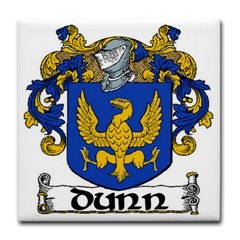
5/28/09

William Edward (Bill) Dunn (1918-1986), Great Grandson of Michael Dunn

Bill's Paternal Ancestry:

To summarize information covered elsewhere, here's a recap of Bill's paternal family line:

Pierce Dunn: Great great grandfather, believed to have emigrated from Ireland to England, probably in the mid 1800s;

Michael and Bridget Grace Dunn: Great grandparents, emigrated from Ireland to England, then to the U.S. (Illinois) in 1858;

William Edward and Josephine Lauer Dunn: Grandparents, lived in Illinois, moved to Missouri, then back to Illinois;

Eugene Michael and Hazel Nolan Dunn: Parents, lived in Illinois, moved to Arkansas (Eugene) and Indiana (Hazel).

♦♦♦

His Maternal Ancestry:

Edward and Mary Ellen Kavanaugh Nolan: Great grandparents, emigrated from Ireland to the U.S. (Illinois) in 1852;

Edward Francis and Mary Ring Nolan: Grandparents, lived in Illinois;


Hazel Lorretta Nolan Dunn and Eugene Michael Dunn: Parents.

♦♦♦

His Immediate Family:

His parents, Eugene Michael Dunn (1898-1969) and Hazel Loretta Nolan Dunn (Youngs) (1899 -1994) were married in Indiana in 1917 and had two children. They were my generation's father, William Edward (Bill) Dunn, and his sister, Rita Jane Dunn.

My mother reported that Eugene abandoned his family sometime after Bill was born in 1918, came back some years later, stayed long enough for Hazel to get pregnant with Rita, who was born in 1928, and left again, this time permanently. None of my generation ever met Eugene, or had even seen a picture of him until I began assembling our family history. After starting to gather our information I met a long-lost second cousin, Mary Green Starasinic, who provided some photos of him.

After I started this project, Rita’s daughter provided copies of several family documents. Hazel and Eugene’s application for a marriage license says he was a bookkeeper and that his parents were William Edward Dunn, after whom Bill was named, and Josephine [Barbara] Lauer, both of Steger, Illinois. Their stories are covered elsewhere in this blog.

With my father, I recall occasionally visiting relatives in Steger as a small youngster. I have no recollection of who they were or how I was related to them. However, after being widowed, that’s where his grandmother Josephine lived until her death in 1942. Also, I've learned that some of his cousins lived and worked in Steger for many years as well. Their stories are also included elsewhere in this blog.

I found Eugene as a child in the 1900 and 1910 censuses, living with his family. His page of this blog includes links to those censuses and other information about him. The
1920 census shows Eugene living in Chicago with Hazel. His occupation was "clerk - die casting" – from which I surmise that he was employed in a clerical job with some sort of factory at that time. Even though Bill was born in 1918, he's not recorded with his family in the 1920 census, which seems odd.

Hazel’s baptismal certificate is interesting. It’s dated 4/24/1961, which means she’d have been 61 years old if that’s correct. A more likely date is 1901, when she’d have been two years old. It was issued by Sacred Heart Church in Joliet, Illinois, and it shows her name as Lauretta Hazel (no other source says this).

Her father’s name was Edward Francis Nolan, her mother’s maiden name was Mary Ring, and both family lines have been traced back to those who emigrated from Ireland. The information we have about them is covered elsewhere in this blog.

To make a living, Hazel worked in retail as a sales clerk. She later married Darrow M Youngs (1903-1982), whom the 1930 census reports was a salesman of candy products. He was with his previous wife in 1930 and the census shows that he had children from that marriage (three in 1930), but he and Hazel had no children together.

Surprisingly, in an era before current sophisticated treatments were available, Hazel survived both colon cancer and breast cancer and lived to be age 95. Hazel Loretta Nolan Dunn Youngs was a gentle and caring person - and was very much beloved by all of us who knew her.

♦♦♦

Bill:


Bill was born July, 6th, 1918, in Chicago, Illinois. Because his father left the family, Bill dropped out of school as a teenager - age 13, I believe - so he could earn money to help support the family. He was a highly intelligent person, but that was the end of his formal education.

His mother was Catholic, and long ago I'd heard that Bill was raised as a Catholic - and even served as an altar boy. Although I'd heard that said of him, I'd never seen any evidence that it was true. However, my mother had several old photo albums labeled by dates - which I currently have - and on the opening page of the first album is a photo with a caption "William E Dunn - age 7". It's him as an altar boy, but somewhere along the line he left his religion behind. As far as I know, he never attended church as an adult and I never heard him express an interest in spiritual matters.

Bill married Fleeta Claire Jones, aka Fleeta Claire Field (Field being her mother's maiden name), in mid-1940. He met her while he was working at a White Castle restaurant in Chicago, where he was reportedly known as “The Wolf of the White Castle” - a "ladies man", if you please. We have a photo of him, circa 1939, outside a White Castle - and he looks very dapper in his dark double-breasted suit and white shoes, so it seems likely the report could be accurate.

To put their marriage into the context of what was going on in the world at that time, here are some headlines from that period:
■ German occupiers disband Dutch States-General/Council of State;
■ SS rounds up 31 German/Polish/Dutch Jews in Roermond Netherlands;

■ France falls to Nazi Germany; armistice signed, France disarmed;
■ Marcel Louette seeks opposition group "White Brigade" on Antwerp;
■ RAF bombs Schiphol;
■ France signs an armistice with Italy during WW II.

So, they were married before the U.S. became involved in World War II when the Japanese bombed Pearl Harbor in 1941 - but the war was was raging in Europe.


Trivia: WWII ended in 1945. However, there were some Japanese soldiers on isolated islands in the Pacific who never got the message that the war ended (or they believed it was a trick) and they fought on for years afterward. The last Japanese soldier to surrender was Second Lieutenant Hiroo Onada who emerged from the Philippine jungle in 1974 to finally surrender. For more on that subject you may want to see if your library has a copy of his book, "No Surrender - My Thirty-Year War".


Trivia: White Castle, for those who aren't familiar with it, is the oldest American hamburger fast food chain, known for square burgers which were priced at five cents until the 1940s, and remained at ten cents for years thereafter. For several years, when the original burgers sold for five cents, White Castle periodically ran promotional ads in local newspapers which contained coupons offering five burgers for ten cents, takeout only. The typical White Castle restaurant architecture features a white exterior with a tower at one corner to resemble a medieval castle.

Bill and Claire opened a tiny grocery store in Chicago around 1941, but it was during WW II, and apparently didn’t last long. I hadn't even known of its existence until beginning this family history. We have a photo of Claire in that store and in the picture is a photo of me as a baby. My birth certificate records that at the time of my birth he was a laborer at Youngstown Sheet & Tube, a steel mill in northwest Indiana, so that was apparently his job, while she ran the little store.


Trivia: Financial info from that era:
Bread: 8¢ per loaf
Milk: 51¢ per gallon
Eggs: 59¢ per dozen
Gas: 18¢ per gallon
Postage stamps: 3¢ each
Car: $810
House: $6,558
Average annual income: $1,906
Minimum wage: 30¢ per hour


♦♦♦

Military Service, His Lack Thereof:

We have a photo of him, circa 1943, which is believed to be his ID photo for the steel mill. As I thought about the timing of when this was taken, I found myself wondering why he didn’t serve in the military during World War II, which was underway at the time.

I did a bit of research and found that there was a draft classification applied to those for whom military service would cause “hardship to dependents”. The classification was called III-A and applied to “men with dependents, not engaged in work essential to national defense”.

It was drawn to my attention that because the production of steel was so crucial at that time, he may have been in the category of those whose work was essential to the war effort. In looking at the draft classifications, it's possible he may have been classed as III-B, "Men with dependents, engaged in work essential to national defense".

So, the evidence suggests that either because he was married and had children starting a year prior to the U.S. getting into the war and/or because of his job in a defense-related industry, he was exempt from serving.

♦♦♦

Info from His Social Security Death Index:

Name: William Dunn
SSN: 347-09-3546
Last Residence: Hammond, Indiana, United States
Born: 6 Jul 1918
Died: Dec 1986
State issued: Illinois


♦♦♦

His Businesses:

In one of Claire's albums is an interesting photo. The caption says, "The '47 Dodge - Our business 4/10/49". The picture on the link shows what it would have looked like, but his had a large box-type affair on the back that made the back a covered area. What's interesting is that the signage on his truck says, "Supreme Baking Co, Calumet City, Illinois". That causes me to think that before he did business as "Unique Bakery Service" and/or "Unique Donuts" (discussed below) Bill must have done business as Supreme Baking Co. I don't recall having known that before seeing this photo.

Trivia: The Calumet City address is of interest as well; it was just across the state line from where we lived. I recall that Bill had some kind of business relationship with a man in Cal City whose name I think was Jack Gannon or Gannis. I remember having been with Bill on occasion when he met with this man, but I have no idea of the nature of their business dealings. However, as I recall, the man owned a strip joint in Cal City - which was widely known as a "Sin City" in that era. It was heavily populated with strip joints and taverns and was infamous for its prostitution in those days.

Trivia: The picture of the truck is taken from the front of our house in East Chicago. Supermarkets as we know them today had not yet come into existence, and across the street is the little mom and pop grocery store/meat market where we got a lot of our food as I was growing up. It was owned by immigrants from Europe - Poland, I think - who came to America to escape the ravages of World War II, as did many of those in our neighborhood in the 1950s.

In any event, Bill became an entrepreneur, owning a bakery and several donut shops called "Unique Donuts". The production of his goods took place at the bakery location at the corner of Cherry St. and Calumet Ave. in Hammond, Indiana. The merchandise was retailed at that shop and was also delivered in vans to his other locations in the Calumet Region, as that area of northwest Indiana is called.

He didn’t start out with physical locations, however. Nor did he manufacture his own merchandise in the beginning. It's my understanding that he was working at the steel mill full-time while getting his bakery delivery business underway on a part-time basis.


♦♦♦

How He Got Started in Business:

He started in business by buying bakery goods at wholesale pricing from a man by the name of
Joe Biegel, owner of Biegel’s Bakery in Roseland, Illinois, on Chicago’s south side. He’d drive there at around 3-4 a.m. every morning to pick up his inventory. There were many occasions on weekends and during summer months when, as a kid, I’d accompany him on trips to Biegel’s to help him load his walk-in truck, in which he had installed racks to hold the bakery trays.

To sell his goods he would drive his truck full of merchandise to outlying rural areas that didn’t have easy access to the stores available to city-dwellers. The truck was equipped with a large bell he'd ring to alert the customers that he'd arrived on the scene. They'd then come out to the truck to buy his merchandise.

Using the business name of Unique Bakery Service, he established routes that he’d cover on a rotating basis on various days of the week and deliver both fresh bakery goods and ice cream products to his customers. As time passed, his business outgrew his ability to handle it all himself, so he added trucks and hired drivers to do the same thing he was doing – take the merchandise to his customers’ doorsteps. We have a picture of three walk-in bakery trucks he owned in the mid-1950s.

In the post-World War II era of the late 1940s and early 1950s, Wal-Mart, supermarkets and large grocery stores hadn’t yet come along. So, his approach was, indeed, unique and it was a service that was appreciated and valued by his customers. For many years he prospered with this approach before deciding to open stores and produce his own merchandise.

He also had wholesale customers - grocery stores and restaurants - to whom he delivered bakery goods as well. I worked for him as a route driver in my late teens and early 20s, and my siblings and I worked in the bakery in various roles when we were youngsters.

In the 1950s he had other business ventures as well. I recall going with him to the Route 30 racetrack in Schererville, Indiana, and being vendors of products (I don't recall for certain, but it may have been ice cream bars and popsicles we sold). He also owned three-wheeled ice cream bikes (similar to the one shown at the link). As a youngster I rode one of them in the summer and sold ice cream bars and ice cream novelties any place I could find groups of people
gathered. Parks where people gathered for softball games were a favorite venue.

♦♦♦

The Mothers of His Children:

Bill and Claire had five children between 1940 and 1948, began living separate lives sometime thereafter, and were divorced in 1957. They had an unusual arrangement, both before and after the divorce. Claire and we kids lived in the large house in the front of the property they owned and Bill lived in one of the two apartments in the rear of the property. So, although they lived separate lives, both before and after their divorce, they lived on the same piece of real estate for several years while doing so.

In 1960 Bill married Jeannine (Jean) Wells, who had three children from a previous marriage. Bill and Jean had two children, and this marriage ended with Jean’s untimely death. Bill spent his final fifteen years or so with Ann Girski, who had four kids from previous marriages, and they had one daughter.

In all, he had three families, fathered eight biological children, had three stepchildren, and played a father role of sorts with Ann's four kids, for a total of fifteen kids. That group have grown to adulthood and the extended family now includes Bill's numerous grandchildren and great grandchildren.

♦♦♦

Stock Car Racing:

For hobbies, Bill was an occasional golfer, but for a period of time had a passion for stock car racing, or what has now evolved into NASCAR. He owned - and drove - stock cars in the 1950s, and we have a photo of one of those cars in our archive. From a current perspective it seems like a hazardous hobby for someone with as many kids as he had at the time.

I have memories of going to a Blue Island, Illinois, racetrack as a kid and watching him race. It was alway exciting to be part of his racing activities, even if only as an observer.

His brother-in-law, Hank Erickson, for one, was involved in helping to keep his cars running, if my memory is correct. I think Peter Tumbiolo, another brother-in-law, may also have been involved at some point as well, although I'm not sure of that.

♦♦♦

His Sister, Rita Dunn Erickson Tumbiolo:

Rita Jane Dunn (1928-2007) married Henry (Hank) Erickson, and they had one daughter. For a period of time when I was a kid, Rita, Hank and their daughter lived in the second rear apartment on the East Chicago property where we lived.

My recollection is that Hank was a milkman. (For younger readers of this blog, a milkman was someone who drove a truck and delivered milk - in glass bottles - and other dairy products to the homes of customers.) Rita’s marriage to Hank ended in divorce, and Rita later married Peter Tumbiolo; he and Rita had one son. I recall that Peter worked part-time for Bill in the donut business - bookkeeping, I believe. If I recall correctly, his full-time job was at Inland Steel, another steel mill in northwest Indiana. I don’t remember what his job there was. However, as a kid, I remember liking Peter a lot. Rita was widowed when Peter died.

I remember Rita as being very sociable, and have fond memories of spending time visiting her as a youngster. My recollection is that there were always lots of friends around, people dropping by, lots of camaraderie and laughing, especially when family gatherings took place.

Although she had no formal training as a nurse, she worked as an assistant to our family doctor, Dr. Richard Schulfer, for many years prior to his death. In a short biographical sketch prepared for our family reunion in 1999, Rita provided the following info: “Retired from the medical field, now working in retail… I like the Internet and love working in my son’s garden. I’m a frustrated interior decorator. I enjoy some arts and crafts. Not all.” Her obituary said, “Rita was a lover of animals and plants. She was an experienced seasonal interior decorator.”


Last updated 5/31/09

5/16/09

Helen Dunn Green Wolf, Daughter of William E Dunn

Background:

As discussed previously in this blog, William Edward Dunn (WED) and his first wife had a daughter, Ella Dunn. After being widowed he married Josephine Barbara Lauer and they had eight children.

I've also written previously about what I've been able to find out about their eldest son, Stephen, and their second son, John (known as Jack). Their next two children were daughters Julia and Rosa, who died as children, and we have no other info about them. They were followed by sons Eugene, Edward and Francis (known as Smiley) Dunn, who are covered elsewhere in this blog.

The last child was Helen M Dunn and this page covers what I've so far been able to learn about her.


To start with, she was born a Dunn in 1907, married John Cecil Green sometime before 1934, and became Helen Green. Helen and John's only child was Mary Lou Green (who married Joe Starasinic).

Helen was widowed, later married Jesse Raymond Wolf, and ended her days as Helen Wolf.
Doing genealogy research with someone whose name changes along the way is indeed an interesting challenge!

♦♦♦

Here's her obituary:

Chicago Heights Star
7/7/1994

"Helen M. Wolf (nee Dunn), a resident of Joliet, formerly a long time resident of Steger, died Sunday, July 3, in Joliet. [Nee is a word of French derivation meaning "formerly known as"
when referring to a woman's maiden name.]

[Funeral] Services were [held] Wednesday at St. Liborious Catholic Church, Steger, with the Rev. John Sponder officiating. Interment was in Skyline Memorial Park, Monee.

The former Helen Dunn was born October 12, 1907, in Crete. She was retired as a sales clerk for Jordans Clothing Store and a member of the Happy Agers of Steger.

She is survived by a daughter, Mary Starasinic of Joliet, and three grandchildren.

Her husband, Jesse, died in 1992.

Memorials may be made to the American Cancer Society.

Arrangements were handled by Steger Memorial Chapel, Steger."

♦♦♦

From the 1910 census:
Being born in 1907, the first census in which she would have appeared is this one. Helen's mother, Josephine Lauer Dunn, and the children lived in Crete, Illinois. Ella would have been 25 by this time, had married, become Ella Dawson, and was no longer in the household. Rosa and Julia had died, and three more children had been born.

WED had died in 1908 and the household looked like this:
Josephine Dunn, 39;
Stephen C Dunn, 17, [illegible word] keeper at Steger Piano factory;
John H Dunn, 15, custom finisher, also at Steger Piano factory;
Eugene M Dunn, 11;
Edward T Dunn, 9;
Francis A Dunn, 6;
Helen M Dunn, 2.


♦♦♦

From the 1920 census:
The family was still living in Crete, and in the household with Josephine, 49, are:
John, 25, a foreman;
Edward, 19, machinist;
Francis,16, millwright;
Helen, 12, presumably still in school.

All three males work for the Steger Piano factory. From other records we know that Eugene married in 1917 and is no longer in the household.


♦♦♦

About John Green:
Here's what I learned about John Green from his daughter, Mary.

Born: Chicago Heights, Illinois, on 19 December 1898;

Died: St. James Hospital in Chicago Heights, Illinois, on 5 December 1953;
Buried: St. James Cemetery in Strassburg, Illinois, on 12 December 1953.

At the time of his death he was survived by four sisters and two brothers:

Mrs. Frances Green Manno of Steger, Il;
Mrs. Sadie Green Stringer of Steger, Il;
Mrs. Anna Green Wyman of Chicago, Il;
Mrs. Hazel Green Zell of Chicago, Il;
Mr. William Green of Steger, Il;
Mr. Joseph Green of Steger, Il.

John moved to Steger, Illinois, about 1927. This could be the year he and Helen Dunn were married. Prior to his death he was employed for 17 years at the Victor Chemical Works in Chicago Heights, Illinois, where he was a foreman.


From the 1930 census:
John is recorded as living with the Stringer family in Steger:
Edward Stringer, head of household;
Sadie, wife; [John's sister]
Edward, son;
John Green, brother in law.

According to this census, John is age 31 and unmarried. It says his father was born in Germany and his mother was born in Illinois. Edward is a “planer” at the [Steger] piano factory. John’s occupation is listed as retail merchant / grocery store. The available data suggests that John and Helen were married between April, 1930, when the census was taken, and late 1933. This would allow at least 9 months between their marriage and Mary's birth.

♦♦♦

Helen's Marriage to Jesse Wolf
From: Cook County, Illinois Marriage Index, 1930-1960
Name: Jesse Wolf
Marriage Date: 22 Sep 1956
Spouse: Helen [Dunn Green]
Marriage Location: Cook County, IL

♦♦♦

From Helen's Social Security Death Index
Name: Helen M. Wolf

SSN: 327-24-9077
Last Residence: Steger, Cook, Illinois
Born: 12 Oct 1907
Died: 3 Jul 1994

I haven't found her in the 1930 census, but will continue to research. As is the case with her brothers Edward and Francis, it would be interesting to know more about her, so I will see what more I can learn and will update this page when I do so.

Last updated 5/22/2009

Francis A (Smiley) Dunn, Son of William E Dunn

Background:

As discussed previously in this blog, William Edward Dunn (WED) and his first wife had a daughter, Ella Dunn. After being widowed he married Josephine Barbara Lauer and they had eight children.

Previously in this blog I've written about what I've been able to find out about their eldest son, Stephen, and their second son, John (known as Jack). Their next two children were daughters Julia and Rosa, who died as children, and we have no other info about them.

They were followed by sons Eugene and Edward, who are covered elsewhere in this blog. The next son was Francis Anthony (known as Smiley), and this page covers what I've so far been able to learn about him.

♦♦♦

Here's his obituary:

Chicago Heights Star
12/10/1987

"[Funeral] Services were [held] yesterday for Francis A 'Smiley' Dunn, a lifelong Chicago Heights resident who died Saturday, December 5 in St. James Hospital medical center.

The Rev. John Doyle, pastor, offered mass at St. Liborius church in Steger. Burial was in Homewood Memorial Gardens cemetery.

Mr. Dunn was born November 10, 1903, in St. Genevieve, Mo. He was retired from woodworking for Caravelle Wood Products Inc.

He is survived by his wife, Edna; one daughter, Colleen Becker of Springfield, Va; one sister, Helen Wolf of Steger, and three grandchildren."

♦♦♦

From the
1910 census:
Being born in 1903, the first census in which he would have appeared is this one. Smiley's mother, Josephine Lauer Dunn, and the children lived in Crete, Illinois. Ella would have been 25 by this time, had married, become Ella Dawson, and was no longer in the household. Rosa and Julia had died, and three more children had been born.

WED had died in 1908 and the household looked like this:
Josephine Dunn, 39
Stephen C Dunn, 17, [illegible word] keeper at Steger Piano factory
John H Dunn, 15, custom finisher, also at Steger Piano factory
Eugene M Dunn, 11
Edward T Dunn, 9
Francis A Dunn, 6
Helen M Dunn, 2

♦♦♦

From the
1920 census:
The family was still living in Crete, and in the household with Josephine, 49, are:
John, 25, a foreman;
Edward, 19, machinist;
Francis,16, millwright;
Helen, 12, presumably still in school.

All three males work for the Steger Piano factory. From other records we know that Eugene married in 1917 and is no longer in the household.


♦♦♦

From Smiley's Social Security Death Index:

Name: Francis A. Dunn
SSN: 346-07-9396
Last Residence: Chicago Heights, Illinois
Born: 10 Nov 1903
Died: 5 Dec 1987


I couldn't find a draft registration for him, nor could I find him in the 1930 census. I will continue to research, but this surprises me, for as you can see above, he was recorded for 1910 and 1920 and was still living in the same area. It would be interesting to know more about him, so I will see what more I can learn and will update this page when I do so.

Last updated 5/17/09

5/15/09

Edward T Dunn, Son of William E Dunn

Background

William Edward Dunn (WED) and his first wife had a daughter, Ella Dunn. After being widowed, he married Josephine Barbara Lauer and they had eight children.

Previously in this blog I've discussed what I've learned about their eldest son, Stephen, and their second son, John, known as Jack. Their next two children were daughters Julia and Rosa, who died as children, reportedly of scarlet fever. They were followed by Eugene, who is also discussed elsewhere in this blog. That brings us to their next son, Edward T Dunn. This page is about him.

♦♦♦

To start, here's his obituary:


Chicago Heights Star
2/9/1975


"A funeral mass for Edward t Dunn, 30 Mckinley, Steger, was celebrated yesterday in St. Liborius church. The Rev. John Doyle officiated. Burial was in St. James cemetery in Sauk Village.

Mr. Dunn. who died Thursday at St. James hospital, was born January 22nd, 1901 in Chicago, and spent most of his life in the south suburbs. He was formerly personnel manager of the Steger Furniture company.

He is survived by a sister, Mrs. Helen Wolf of Steger and a brother, Francis, of Chicago Heights."

From what is reported above, it appears that he was a lifelong bachelor, since neither a wife nor children are mentioned as survivors. The Steger Furniture company is discussed in detail on Stephen C Dunn's page of this blog.

♦♦♦

From the
1910 census:
Being born in 1901, the first census in which he would have appeared is this one. The widowed Josephine Lauer Dunn and the children now lived in Crete, Illinois. Ella would have been 25 by this time, had married, become Ella Dawson, and was no longer in the household. Rosa and Julia had died, and three more children had been born.

WED had died in 1908 and the household looked like this:
Josephine Dunn, 39
Stephen C Dunn, 17, [illegible word] keeper at Steger Piano factory
John H Dunn, 15, custom finisher, also at the piano factory
Eugene M Dunn, 11
Edward T Dunn, 9
Francis A Dunn, 6
Helen M Dunn, 2

♦♦♦

From the 1920 census:
The family was still living in Crete, and in the household with Josephine, 49, are:
John, 25, a foreman;
Edward, 19, machinist;
Francis,16, millwright;
Helen, 12, presumably still in school.

All three males work for the Steger Piano factory. From other records we know that Eugene married in 1917 and is no longer in the household.


♦♦♦

From Edward's Social Security Death Index

Name: Edward Dunn
SSN: 343-05-2802
Last Residence: Steger, Illinois, United States of America
Born: 22 Jan 1901
Died: Feb 1975

I couldn't find a WWI draft registration for him, which may be because he was too young to be eligible for the draft, for the war ended in 1918 when he'd have been just 17 years old. Nor could I find him in the 1930 census. This surprises me, for as you can see above, he was recorded for 1910 and 1920 and was still living in the same area.

It would be interesting to know more about him, especially about how he spent his later years.

Last updated 5/16/09

5/14/09

Stephen C Dunn, Son of William Edward Dunn

Stephen C Dunn: From Factory Worker to Company Owner

William Edward Dunn (WED) and his first wife had a daughter, Ella. After being widowed, he married Josephine Barbara Lauer and they had eight more children. Their eldest son was Stephen C Dunn, and this page is about him; it's a success story from this generation.

First, Stephen's Obituary

Chicago Heights Star
8/16/1938

"Death Claims Stephen Dunn; Funeral Today

Funeral services will be held today for Stephen Dunn, well known Steger businessman, who died at his home, 3418 Halsted street, Steger, Saturday afternoon following a lengthy illness. He was 48 years old.

Mr. Dunn had been taken to his home about a month ago from St. James hospital, where he had been for two months. Previous to that he underwent treatment at a Chicago hospital. Many friends and business associates in Chicago Heights and Steger were grieved to learn of his death.

A former superintendent of the Steger Piano company during its operation, Mr. Dunn for the past six years was a partner with Vincent Trabucco in the Steger Furniture factory. Mr. Dunn was born in St. Genevieve, Mo., and had lived in Steger for the past twenty-five years.

Survivors are the wife, Mrs. Louise [Seiter] Dunn, and four children, Leonard, Jennie, Aurelia and Stephen, all of Steger.

Friends will pay final respects at funeral services at ten o’clock this mornlng in St. Liborius church, Steger. The Rev. M. P. Weidner, pastor, will officiate. Interment will be made in St. James cemetery, Strassburg."

♦♦♦

From the
1900 census:
The family lived in Chicago, Illinois.
The household was made up as follows:
William Dunn, 38, R.R. track foreman
Josephine Dunn, 29
Ella Dunn, 15, nurse girl
Stephen Dunn, 7
John Dunn, 5
Rosa Dunn, 4
Julia Dunn, 3
Eugene Dunn, 1

♦♦♦

From the
1910 census:
The family now lived in Crete, Illinois. Ella would have been 25 by this time, had married, become Ella Dawson, and was no longer in the household. Rosa and Julia had died of scarlet fever, and three more sons had been born. WED had died in 1908 and the household looked like this:
Josephine Dunn,
39
Stephen C Dunn, 17, occupation appears to be "stock keeper", but could be book keeper; worked at the piano factory.
John H Dunn, 15, custom finisher, worked at the piano factory.
Eugene M Dunn, 11
Edward T Dunn, 9
Francis A Dunn, 6
Helen M Dunn, 2

♦♦♦

From Stephen's WWI Draft Registration:
Date: June 5, 1917
Name: Stephen C Dunn
Age: 26
Address: Steger, Illinois
Date of birth: 16 December, 1892
Occupation: (illegible)
Employer: Steger & Sons [piano factory]
Exempt from the draft: Yes, had wife and child

♦♦♦

From the
1920 census:
By this time Stephen had married and his young family now lived in Crete. Here's his household at that time:
Stephen Dunn, 27, foreman, piano factory
Louise Dunn, 33
Leonard Dunn, 3

♦♦♦


From the 1930 census:
His family had now moved to Steger and the household looked like this:
Stephen Dunn, 38, superintendent, radio factory
Louise Dunn, 42
Leonard Dunn, 13
Genevieve Dunn, 7
Aurelia Dunn, 6
Stephen Dunn, 3

♦♦♦

About the Steger & Sons Piano Manufacturing Company
Several members of Stephen's generation of our family worked for the Steger Piano Company, and an Internet search turned up some interesting information about it. The company was formed in the days before radios became household items, an era when pianos were a primary source of household entertainment. This excerpt of an article about the company touches on that issue:

"[John] Steger worked at a series of different jobs and lived in various households where he noticed that the most prominent piece of household furniture was a piano. In the booming post-Civil War United States, the piano was not merely a musical instrument but a status symbol, sole purveyor of entertainment to thousands of homes. Built by a master craftsman and his apprentices, the ornate piece of decorative furniture was expensive. Thus, although in great demand, only the wealthy could afford them. Steger's dream was to make the piano affordable for everyone through mass production."


Mr. Steger - who emigrated to the U.S. from Germany in 1871- was highly successful in this piano manufacturing endeavor, and became a multi-millionaire. When he died his estate was valued at $3 milliion dollars. In 1916! Adjusted for inflation, that's the equivalent of more than $59 million in 2008 dollars. In building his success he recruited German craftsmen, developed assembly-line manufacturing of pianos and designed special railcars for shipping them. By 1920, the village of Steger was the "piano capital of the world," producing more than 100 pianos a day.

Another article says this about the company:


"Steger died in 1916 at the height of his prominence and popularity and at the pinnacle of his company's prosperity. He was spared from experiencing consumer whim-switching from the piano to the newfangled contraption, the radio. No longer the most sought after household item, demand for the mass-produced piano dwindled away. Sales plummeted, and ten years later, Steger's grand dream suffered the marketplace's deathblow. Steger and Sons Piano Manufacturing Company declared bankruptcy in 1926."

♦♦♦

About the Steger Furniture Manufacturing Company
As the popularity of radios effectively killed the mass market for pianos, radios began to dominate the home entertainmet market. The resulting demand for radio cabinets led to the formation of what became known as the Steger Furniture Company. Here's an excerpt from an article about that:

"After Steger's death in 1916, the factories continued until closing in 1926. Having depended on one major manufacturer, the village was particularly vulnerable during the Great Depression. However, the remarkable collection of buildings continued to be a key employment center. In 1930 a macaroni factory started in one of the old buildings, and several years later local craftsmen joined together to manufacture radio cabinets in another. At its height of activity, their Steger Furniture Company employed close to 700
."

After seeing that article I ran across a website containing a lot of Steger history and photos, and there I found this article:

"Old Steger Piano Factory Home to Steger Furniture and Others

By Emil Zeman

In 1932 a business that was later to be known as Steger Furniture Company had its modest beginning in the old Steger Cafeteria building located on the southwest corner of 33rd place and Chicago Road. With just a handful of workers this business began to produce wooden cabinets for table model radios.

In late 1933 a group of four men, Vince Trabucco, James Sperti, Steve Dunn and Frank Schaefer (the first three individuals were Steger residents) acquired the Steger Piano Company property that had been vacant for several years. These four men founded Steger Furniture Company and developed it into a prosperous enterprise.

In 1934 the cabinet shop was moved from the cafeteria site to the new location. The new site was the three-story structure on East 34th St. located just west of the old C & E I railrosd tracks that had been a part of the Steger Piano factory.

In 1935 this same company started production of console-type radio cabinets began (sic) in another part of this huge complex. Later, cabinets for Hi-Fi units, record players and TVs were part of the production line. In peak years as many as 700 workers were employed by Steger Furniture, producing well over 100,000 large cabinets plus many thousands of small cabinets in the 34th Street plant."

The dates in the above article coincide with Stephen's 1938 obituary, for it says he and his partner had owned the business for six years. So, it was 1932 when Stephen and his partners started the Steger Furniture Company. This would have been during the height of the Great Depression, which began in 1929.

It would have been a huge challenge to start a business during that period. However, their ability to grow their new business to the point of employing hundreds of workers suggests that they saw the business of making wooden cabinets as the wave of the future as the country moved into the age of electronics. Why would they have made radios with wooden cabinets? According to the research I've done, plastic didn't come into its own until after World War II.


The result of their vision - and timing - was a high level of success. We have a snapshot - made into a postcard - of Stephen and his wife Louise, along with his brother John and his wife Ruth - both successful businessmen - who, in the midst of the Great Depression were prosperous enough to afford an Alaskan cruise on a pleasure ship. The ship was the S.S. Dellwood and on John's page of this blog you will find some interesting things we've learned about that ship.

As to the company itself, in 1945 Steger Furniture Company was acquired by the publicly-held Sparton Corporation to manufacture cabinets for the radio and radio-phonographs that had become the mainstay of the Sparton product line.

Last updated 5/18/09